
Author: webadmin@ruthsroad.org

  • #33 “Sand Isn’t the Foundation”

    Bechukotai/In My statutes

    Leviticus 26:3-27:34

    Jeremiah 16:19-17:14

    Promises and problems…think about the ‘promises’ for the future of whatever country you may be living in; things written in the official documents that were used to establish order there and your history…some of course have worked out better than others, but we could all say they are the work of previous leaders who had your best interests in mind or had either no or very little concern for your personal welfare. This, you might say, is the plight of all people upon the earth! However, there is one nation that is different; it is the land and people of Israel! (With that in mind, we may use that truth to inform our minds and hearts, how we look at these people and this land…especially when you consider where these foundations came from and Who laid them.) These foundations aren’t full of shifting sand like those written by mere mortals; they are established first in heaven by the Lord God Almighty, King of the whole earth…and established upon the earth through the ‘agency’ of His word and His First Born (Israel) for all to see (a light to the nations).

    In the reading in Leviticus, He lays out what you might say is the ‘constitution of heaven’ for the earth and His people to prosper and have abundant life; contrasted by what the gods of this world cause to happen to His people (and all people), that become subject to them instead of Him. He doesn’t even need to judge His people, because the atmosphere and rule of these gods is judgement in itself! Oh, for the mercy and longsuffering of our God! He is so faithful to His promises and intentions for the Children of Israel; not only for Himself; but for all of mankind to see what His rulership looks like in flesh and blood. Even where the Jewish people were failing; He sent Jesus as a full demonstration of His love and rule.

    So today as you read these scriptures, don’t get lost in the details, but consider what they were meant to produce upon the earth as we await His return… Consider the suffering we see around the entire earth and the failings of even good men and women to lead the nations of the earth, and rejoice in a God that has a better way and hasn’t given up on His plan!

    Jeremiah 16:19-21: 19 O Lord, my strength and my fortress, My refuge in the day of affliction, The Gentiles shall come to You From the ends of the earth and say, “Surely our fathers have inherited lies, Worthlessness and unprofitable things.” 20 Will a man make gods for himself, Which are not gods? 21 “Therefore behold, I will this once cause them to know, I will cause them to know My hand and My might; And they shall know that My name is the Lord.

    He has given His word; the nation of Israel…and His Beloved Son, to cause righteousness to be seen upon the earth and populate heaven with its inhabitants…Praise the Lord of Glory! by john eisner

  • #32 “God’s Treasure Keepers”

    Behar/On the Mount

    Leviticus 25:1-26:2

    Jeremiah 32:6-27

    Do we stand on one side of the road and see God’s judgments and displeasure; or on the other side and see the abundant grace in His promises for a future and abundant life?  Take some time if you can and read the torah portion in Leviticus and consider the magnificence of the Lord of Glory’s economic system, that makes man’s versions so one dimensional in comparison and scope.  This week however, I want to focus on the haftorah portion: Jeremiah 32:6-27. I have to admit that I don’t totally understand the context of their situation being in what seems to be prison; yet there is obviously some ability to meet and buy and sell… So, Jeremiah buys a piece of land, making sure it’s totally legal and then the Lord says:

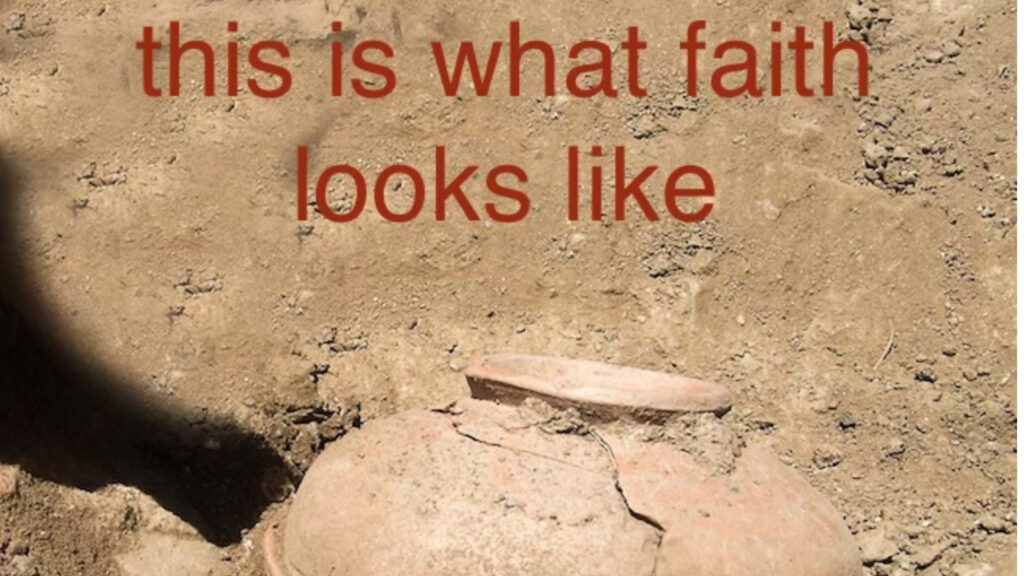
    14 ‘Thus says the Lord of hosts, the God of Israel: “Take these deeds, both this purchase deed which is sealed and this deed which is open, and put them in an earthen vessel, that they may last many days.” 15 For thus says the Lord of hosts, the God of Israel: “Houses and fields and vineyards shall be possessed again in this land.”

    The Lord in His all knowing, helps the children make provision for their unseen future; here they are in captivity, and He instructs them to put the deed in an earthen vessel that will last “many days”… With just a few words the Holy One of Israel gives them perspective and hope at the same time: He is so good! Thus, even in a time of judgments Jeremiah is able to respond:

    17 ‘Ah, Lord God! Behold, You have made the heavens and the earth by Your great power and outstretched arm. There is nothing too hard for You. 18 You show lovingkindness to thousands, and repay the iniquity of the fathers into the bosom of their children after them—the Great, the Mighty God, whose name is the Lord of hosts. 19 You are great in counsel and mighty in work, for Your eyes are open to all the ways of the sons of men, to give everyone according to his ways and according to the fruit of his doings.

    God isn’t trying to produce theologians, but lovers of Him and His ways!  An earthen vessel is used to produce a heart that can know God!  Nothing with Him goes to waste; what a God we serve; the gods of this world should not even be able to tempt us…  Jeremiah and the people of God are also encouraged by knowing their history with Him:

    20 You have set signs and wonders in the land of Egypt, to this day, and in Israel and among other men; and You have made Yourself a name, as it is this day. 21 You have brought Your people Israel out of the land of Egypt with signs and wonders, with a strong hand and an outstretched arm, and with great terror…

    Let’s become aware of our heritage in the Lord; whether you are a Jew and can easily access these words of the Lord, or as a Gentile know that you have been grafted into this “household of the Living God” through the blood of Jesus.  Our present situation is held in the loving hands of the Creator of all that ever was and shall be!  Enjoy the comfort of that truth and let it penetrate your very being and not just your mind! Isn’t it amazing that He put His treasure in these (us) earthen vessels, to preserve that treasure for the future!

    “But what got them in this captivity?” you might ask…:

     22 You have given them this land, of which You swore to their fathers to give them—“a land flowing with milk and honey.” 23 And they came in and took possession of it, but they have not obeyed Your voice or walked in Your law. They have done nothing of all that You commanded them to do; therefore You have caused all this calamity to come upon them.

    Note to self: it’s not the devil!  When the Children of Israel enter into captivity, it is actually the beginning of their redemption, as seen in God’s promises to them; will end here, not to belabor the point: God is so good!  by john eisner

    Bonus verse for you Gentiles: Ephesians 2:19 Now, therefore, you (Gentiles) are no longer strangers and foreigners, but fellow citizens with the saints (Children of Israel) and members of the household of God, 20 having been built on the foundation of the apostles and prophets (Old Testament History), Jesus Christ Himself being the chief cornerstone, 21 in whom the whole building, being fitted together, grows into a holy temple in the Lord, 22 in whom you (Jew and Gentile) also are being built together for a dwelling place of God in the Spirit.

    I would like to invite you to consider reading my book available on amazon: “The Book of Ephesians…a love story to the Gentiles” by john eisner

  • #31 “Revelation not Promotion”

    Emor/Speak

    Leviticus 21:1-24:23

    Ezekiel 44:15-31

    I think this week I will focus on the Haftorah, but I would be remiss if I didn’t mention Christie’s books on the Biblical Feasts, since her ‘mandate’ comes up this week in Leviticus 23; so kindly check out her two books: “Finding the Afikoman” and “Watching and Waiting”, by Christie Eisner; found on amazon.com

    On to Ezekiel 44:15-31; what a privilege we have to have the light of God reflecting upon His Word and our hearts, so we can drink from His river of Life, as we read and allow the word to wash over us. Every week as I wonder if there is anything that I can put before you; I am so thankful that even if no one reads a word of what I write; I get to spend this time with the Lord. This passage seems to focus on clothing; what it’s made of and what is worn…but of course, that is merely the surface. It almost takes some ‘recalibrating’ for us not to see holy behavior or holy expectations as duty or imposition upon our ‘free will’; whereas biblically speaking, holiness is a gift; a privileged place in the presence of the Living God; a delight. Even in the first verse, we… “(15) the sons of Zadok get to stand before the Lord, Himself.”…  get to!  While they do this relational duty, they wear linen and no wool: “nothing that causes sweat”.

    Could it be that it’s ‘no sweat’ to serve God, in holiness? No self-effort. When they come out of His presence and stand before the people; they take these special ‘holy’ clothes off, because some things in our lives are meant only for the Lord. What if some of the greatest revelations or experiences we have with Him in private, are not meant to be shared? What if even in the name of encouraging the body of Christ, or even building our ministries…or whatever? I wonder if we would have more, let’s say burning bush experiences if they were treated as holy… I had a friend once tell me, “Revelation is for intimacy; promotion comes from the Lord; revelation isn’t for promotion”. Wow!

    So, this week let’s work on learning how to ‘go in’ to the Lord’s presence, and how ‘to come out’ of His presence. May our hearts grow to overflowing, as we learn to value those precious moments and pour them out as ointment upon His feet. Think about it; when Mary poured the precious ointment upon Jesus’ head; everywhere He went they could smell Mary’s ‘fragrance’; Jesus humbled Himself to carry her ‘testimony’ everywhere He went…even upon the cross as the wind blew upon His mangled body, drenched with Mary’s ointment… Stop and take a breath! by john eisner

  • #30 “Amos in Acts?”

    Kedoshim/Holy ones

    Leviticus 19:1-20:27

    Amos 9:7-15

    This week I would like to take you on a ‘journey’ to the book of Acts, by way of Amos.  In the torah portion this week the Holy One of Israel lays out the measuring line for His people; the litmus test for who they really will and should be.

    Leviticus 19 And the Lord spoke to Moses, saying, 2 “Speak to all the congregation of the children of Israel, and say to them: ‘You shall be holy, for I the Lord your God am holy.

    If you were not to know anything else or expect anything else of God’s first born, this would be it: Holy! There may be some guidance on how to live and respond to different life situations and circumstances, but at the end of the day you can ignore all the discussions and arguments about the details of their lives, the issue and promise is: ‘You shall be holy, for I the Lord your God am holy. What a gift that is, especially if you don’t misunderstand the word “shall”.  If you can see that it’s not a performance word, but rather a promise word directly from the lips of our Heavenly Father!  You essentially will be holy, because I am holy!  You might be tempted to say that He has quite a job on His hands, but I would say “no” to that because He is God, and nothing is too difficult for Him! That goes beyond a promise to a guarantee! Now let’s take that thought and include the Lord God Almighty’s promises and apply them to the Gentiles.  I believe part of the key for this is in Amos, but it has added authority the way it’s used in Acts 15. You may have never really noticed today’s haftorah portion in Acts 15, but it’s there as the ‘proof text’ used by the Jewish leaders of the body of Christ to accept the inclusion of the Gentiles into the household of God.  I’m pasting in the Acts 15 version but be sure to go to our reading in Amos 9 to see the whole verse. 

    Acts 15:16 ‘After this I will return And will rebuild the tabernacle of David, which has fallen down; I will rebuild its ruins, And I will set it up; 17 So that the rest of mankind may seek the Lord, Even all the Gentiles who are called by My Name, Says the Lord who does all these things.’

    Yes, this is Amos 9:11-12 with a little ‘apostolic hermeneutic’ interpretation (this may need some explanation at another time, but for now just know that somehow the apostles of that day had this authority). For the sake of space and time I will shorten a discussion of all this but know this was the verse used to help all the other Jewish believers accept that a Gentile could even be ‘saved’!  Read all of Acts 15 and let Holy Spirit open it up to you! I believe what the Lord is saying here, is that this “fallen tabernacle” traditionally represents the Jewish people in a fallen state and also the promise of the Messiah being raised from the dead.  Try not to fall into a big theological hole here or let your intellect keep you from rejoicing in what is here! Just as in Amos, God basically tells Israel that when He restores them and gathers them unto Himself from the nations; He will also cause the Gentiles to seek Him (and find Him through Jesus)! Going back to the Leviticus 19 promise to Israel, now you Gentiles that may be reading this, through the “raising up of that fallen tabernacle”, are going to be made holy!

    Forgive me if this seems convoluted, but let your heart and spirit spend time with it and you may begin shouting for joy!  Know for sure today, with all of our shortcomings and faults, that what Jesus has accomplished is adequate to make us holy! Let us all enter into this glorious truth and together, Jew and Gentile, glorify the Most High God, our Heavenly Father! by john eisner

  • #29 “Scab removal”

    Acharei Mot/after the death

    Leviticus 16:1-18:30

    Ezekiel l22:1-19

    I feel like I need the Star Trek intro to go on: “Go where no man has gone before”… or shouldn’t go. I will try to explain. There are certain subjects or areas you aren’t supposed to address or act like you notice, and I believe some of those ‘places’ reside on the road of praying for the Jews or Israel.

    Firstly, I want to note that I am a Jew, and maybe I can have more liberty venturing into dangerous places in this area. When I hear the mandate to pray for Israel and see the corresponding answer to that call in terms of people praying; I feel I can’t help but make a few comments. I don’t mean in any way to expect or entertain the luxury of being either critical or wrong; just because I am a Jew. Sometimes there is an attitude when praying for the unsaved Jews, as they are seen as pathetic in having ‘rejected’ Jesus or that their sinful condition as a land (Israel) is somehow excused or not to be noticed. I would like to make note that somehow God, all through the scriptures noticed and made note of their bad behavior. There is some kind of fear that you would be seen as antisemitic or being insensitive to all that they have suffered. Let’s take a short ‘biblical moment’ and pull a small scab off; so maybe some healing may come.  If you are a Gentile, take my hand for a moment and just blame it on your Jewish guide if we fall into a ditch on the side of the road to truth.

    The torah portion for the week includes a time of recovery from the fire of God consuming some errant priests with a warning and instructions for approaching God’s presence so there isn’t a ‘repeat’ for the sons of Aaron. Keep in mind the issue here isn’t legalism but a Holy God and His holy people. As we wander over to the haftorah portion in the context of learning how to pray for the Jewish people, Israel keeps this same (a Holy God and His holy people) context in mind.  Ezekiel 22:1-19, the people of God (a Holy God and His holy people) have shed innocent blood (kind of like abortions today) and defiled themselves with idols; despised God’s holy things and profaned the sabbath; slander; lewdness; violate women; adultery; incest; extortion; and “…have forgotten Me”. Pretty good, even modern list of wrongs against God; but not by just anyone, but His very own ‘special treasure’; the Jewish people and Israel! So, if these things; whether all or in part, are evident in that ‘holy’ community, are we to be more gracious than God? I don’t mean in a condemning way, but rather in at least making note of and responding in a redemptive way.  We act like the only issue is that these “poor, blind souls need Jesus” (which of course they do!) but that’s missing the entire context of God’s purposes for the Jews and the nation of Israel. If we allow ourselves to peer into God’s heart for His people Israel and attempt to feel what He feels about their actual condition, compared to His desire for them; it could change how and what we pray.

    When you consider He revealed Jesus through them to the Gentiles, they were to be a light to the nations continually. We could have a degree of authority upon our lips, rather than mainly random well-meaning words that dribble out; though I grant us; well, meaning. Of course, we need to keep praying even with our limited understanding, but I just want to encourage each believer; whether Jew or Gentile, to ask for more revelation upon how to pray for them. If we consider His eternal covenant with them and verses like: “For God has committed them all to disobedience, that He might have mercy on all.”  We know that many Jews are in need of ‘salvation’ through the revelation and encounter with Messiah Jesus our Lord; but our traditions may ‘cloud’ the actual purpose and understanding of this salvation. What if His focus is on their ‘restoration’; the ‘returning as a prodigal’ to once was meant for them? It’s not to say they don’t need to be saved; but it might affect our attitude or perspective when we pray.

    “So today, I ask You Lord God Almighty, King of Israel, share your heart with us; let us feel your passions and emotions concerning the condition of Your firstborn…May You get Your just reward in Your people and may Jesus, the Messiah of Jews and Gentiles alike be glorified and lifted up, and may Your first born; Israel, be restored to Your covenant with them and the household of God, with their Gentile brethren; One New Man; a beautiful bride; waiting for the day of the consummation that You promised her with Your Beloved Son”.

    It is so difficult for me to totally communicate what is on my heart, combined with as yet not full clarity of what all this should really look like; we have never been here before. Reading in Luke 1 this morning this verse ‘struck’ me: 53 He has filled the hungry with good things, And the rich He has sent away empty. 54 He has helped His servant Israel, In remembrance of His mercy,55 As He spoke to our fathers, To Abraham and to his seed forever.”

     Maybe an aspect of praying for Israel and the Jewish people is that “He would help His servant Israel remember His mercy” … (also we must remember; Israel isn’t a project; He sees her as His servant and His first-born). by john eisner

  • #28 “Ministry’s Reward”

    Metzora/Leprous

    Leviticus 14:1-15:33

    IIKings 7:3-20

    I don’t mean to be disrespectful to the scriptures, but part of today’s haftorah portion reads like a Monty Python (irreverent British comedy) script. The ‘heroes’ are a family of 4; Gehazi (Elisha’s servant and his 3 sons), all stricken with leprosy.  I will address the reason for their condition later, but basically their nation is having a horrible famine and between being total outcasts and starving to death, they set out for the enemy camp.  They reason that the Syrians will either let them live (which means they will get fed), or they will kill them for being leprous and being the enemy, which is also okay since they are starving to death anyway!  As they approach the Syrian camp, the Lord causes the sound of a great army to be heard outside the camp, and all the Syrian army flees, leaving all their possessions and food behind. All this causes Elisha’s prophecy to the King of Samaria to come true. Here is some context: there was such a famine in the land that people were actually eating their children, if you can even imagine, plus living in fear of the Syrian army wiping them out. The king unfortunately doesn’t take responsibility for their plight and blames the man of God, Elisha, for not stopping the famine. The Lord announces through him that basically that there will be so much food the next day, that it will be almost free! To which the king’s guard says that it could never be! To this ‘exercise’ of unbelief, Elisha tells him he won’t eat of it and in fact the king will die. Guess what! It really happens; after the lepers tell the city about their find, the city rushes to get the massive amounts of food and in the process, the king’s guard gets trampled to death. I won’t even try to give you a life’s lesson from all this, except maybe to be prepared to believe God…!

    BONUS INSIGHT: I’m not sure if you caught the fact that it was Elisha’s servant that was leprous.  We would normally think that possibly being a servant in the ‘kingdom’ has some safety benefits…and that would be accurate for the most part.  However, it can also have some pitfalls!  After Naaman got healed of leprosy by the word of the Lord from Elisha, as he was leaving for home, Gehazi ran after him and required a reward for his healing. Not a good idea! Not God’s idea of fundraising for your ministry! The only ‘reward’ that Gehazi left with that day was leprosy for himself and his sons! I don’t think I need to clarify…  by john eisner

  • #26 “Keep your hands in your pockets”

    Sh’mini/Eighth

    Leviticus 9:1-11:47

    2 Samuel 6:1-7:17

    In this ‘small’ space we can’t begin to unpack all that is here…for that matter it could take a lifetime to even begin, so here are a few crumbs I offer you, to add to whatever you too may see in these verses.

    It’s funny I really don’t even want to write anything at the moment, so as not to imply in any way that one thought is more important than the other; this is just an offering. Where do we begin? Fire coming from the altar of God and killing a few priests…? I believe our focus is the foundational way God sees His people: a holy nation and a royal priesthood; not just a priestly class to do everything. Behavior rules and food regulations aren’t for control or imposed limits; but rather something the Lord sees as an important part of how His holy people live and interact with Him: just as He is holy. It’s so easy to make personal ‘adjustments’ out of convenience; or just thinking we know better; which of course is so ridiculous and costly to those who partake of this behavior (again like fire consuming some of the ‘smarter’ priests). 

    Now let’s jump over to the haftorah (2Sam 6:1-7:17), I’m going to give you a short version of what I felt the Lord gave me as an insight into the death of Uzzah. Have you ever wondered why the Lord smote him and right on the spot! Seems pretty sever for a guy just trying to do his job!  But was it his job? Here is a little ‘tidbit’ from Jewish lore: the priests didn’t really carry the ark; it carried them. Take a minute to consider the implications of that for them and us. Here is kind of an example for us: let’s say you pray for someone and they get healed; did you heal them? No, of course not, but you probably got the hug from the healed person! It, so to speak; “looked like you carried the ark; but it carried you”. So Uzzah being a full-fledged card carrying priest knew that, and could it be that when the oxen stumbled and caused the cart to wobble…he was protecting either David’s (representing leadership) reputation for choosing the cart; or just reputation of the cart company (representing denominations or theologies)…  Do you ever find yourself in a situation where you might have to ignore a scripture or two to defend a leader, denomination, or theology…or your own behavior? Oh, I almost forgot; we are Christians and don’t do that kind of thing; all of our denominations and theologies line up perfectly with the word of God…well maybe not!

    Let’s take an opportunity this week to ‘keep our hands in our pockets’ and not worry if the oxen stumble a bit, and see if God Himself can look after His Church and us. by john eisner

  • #27 “The Jordan dip isn’t a dance step”

    Tazria/she bears seed

    Leviticus 12:1-13:59

    IIKings 4:42-5:19

    As I read these portions in Leviticus over the last week or so; I have never seen or felt this before, so rather than trying to understand or decipher the various commands, I can tell you it just feels like Holy Spirit walking among the children of Israel and just depositing words of life in their midst…wow! Lord thank You for Your wonderous word and Your presence.

    Now onto the haftorah, this might be a bit of a ‘stretch’; in IIKings 5 we are presented the story of Naaman, a Syrian (Gentile) commander with leprosy. I’m not sure how the Gentiles handled lepers, but this guy at least seemed very prominent and successful. (Interesting to note that it says, “the Lord gave him victory, as a Syrian commander”), could this be one of those ‘divine’ setups to display the glory of the Lord for all to see…? They capture a young woman who is one of the children of Israel and she mentions to Naaman’s wife that if her husband presented himself to the prophet Elisha of her people; he would get healed. So being a successful leper wasn’t after all the ultimate goal for a full life, Naaman got the king’s permission to check this Hebrew prophet out. Elisha on the other hand sees it as a great opportunity for the God of Israel to do a great thing through one of His prophets. Naaman shows up at Elisha’s house and he has so much confidence in what the Lord wants to do, that he just sends his servant to speak to him. Elijah tells him to dip in the Jordan seven times, with the promise that he will be totally healed! Naaman however felt belittled or insulted since Elisha didn’t personally come out to pray for him. (A little note here: I think it’s also a sign of humility on Elisha’s part, knowing that even his servant could convey the healing message, since he knew that it’s the Lord Himself that heals.) Naaman leaves in a huff and declares that the waters of Syria are better than the waters of Israel.

    Here is my first ‘stretch’; this struck me as an example of replacement theology that is rampant in much present-day theology that declares it’s freedom from God’s delight of His firstborn, the Jews and their land… Naaman’s servants appeal to him to reconsider his decision by addressing his pride and wanting special treatment. “All you need to do is wash and be clean” and now for ‘stretch’ number 2!

    I believe this addresses the next ‘step’ after recognizing our inclination to replacement theology by acknowledging the value of the Biblical Feasts: this is the practical response to a theological change… He goes back and ‘dips’ seven times in the Jordan and gets healed! Listen to his response: “Indeed, now I know that there is no God in all the earth, except in Israel…” Pretty cool, and in that context I want to invite you this year, to not only grow in the knowledge and understanding of God’s intentions for Israel and the Jewish people, but celebrate the Biblical Feasts this year and take a chance for a real theological ‘healing’.  I told you it was a stretch, but really, come along with Jesus this year and celebrate the holidays that He does. by john eisner

    If you need any help, you might consider ordering Christie’s books on Amazon

  • #25 “So what’s the big deal; just a couple of blemishes!”

    Tzav/Command

    Leviticus 6:8-8:36

    Jeremiah 7:21-8:3,9:22-23

    The torah portion this week lays out some of the ‘mechanics’ of functioning with the required offerings etc. What we don’t want to miss here for starters is, “why do any of this in the first place?”…or maybe, “does it really matter exactly how we do it?” I can’t take too much liberty with the space here, nor the time you have to invest and ponder, but the “why” will answer a lot of questions in their future (the Children of Israel) and ultimately in ours (Jew and Gentile believers in Jesus).

    This enormous ‘project and life-style’ was initiated by the Holy One of Israel, when Moses came down from the mountain, after standing on the Sea of Glass and experiencing the realities of the heavenly realm (the Tabernacle made without hands).  The Lord in His graciousness and love for His creation, allows Moses, to let’s say, build a ‘replica’ of what he saw and experienced with the Lord on the mountain. Now let’s stop here and realize; this is no small thing: in scope and in promise on God’s part.  How do you build something that exists where there is no sin and no time, and reduce it to the elements that are available on a ‘fallen’ planet, full of deterioration and sin? So thus, to this the Lord says, “build it according to the pattern I showed you on the mountain”…as to say: “if you use what is available to you in a prescribed manner, I (the Lord) will recognize it as if it were ‘where I dwell’”.  The practical implications of all this for Israel and all of humanity is astounding! You can ‘park’ here for a while and contemplate this, but I better move on. 

    Now we find ourselves in the haftorah portion in Jeremiah many years after Moses’ time with God on the ‘mountain’. It becomes apparent that time has, shall we say, eroded the understanding and connection to the original plan and purpose of the tabernacle and the sacrifices. Israel finds itself where we are all capable of going: dead religion! We might have some of the mechanics right; though we usually fudge on those too (blemished sacrifice instead of unblemished etc.). It all seems so much less cumbersome and way more efficient to not be so choosy about the sacrifice you bring; at least I know the feeling… As a result, it’s easy to wonder, “Where did God go, I thought He said He would never leave us or forsake us. He sure seems ‘distant’ and angry lately…some loving God!” Could it be me, and not Him? “Those other gods that seem so much easier to please, probably just make Him jealous”, we might say! “We do have quite a rousing time worshiping these gods, though afterwards, it does feel a bit different than it used to when He was so near…” (Jeremiah 7:34) “Then I will cause to cease from the cities of Judah and from the streets of Jerusalem the voice of mirth and the voice of gladness, the voice of the Bridegroom and the voice of the bride. For the land shall be desolate.” I’m going to ‘cheat’ here and add one extra verse to the beginning and the end of the haftorah reading, just so we can see the wonder of the God we have been joined to through His love;

    Jeremiah 9:21-24 For death has come through our windows, Has entered our palaces, To kill off the children—no longer to be outside! And the young men—no longer on the streets! 22 Speak, “Thus says the Lord: ‘Even the carcasses of men shall fall as refuse on the open field, Like cuttings after the harvester, And no one shall gather them.’ ” 23 Thus says the Lord: “Let not the wise man glory in his wisdom, Let not the mighty man glory in his might, Nor let the rich man glory in his riches; 24 But let him who glories glory in this, That he understands and knows Me, That I am the Lord, exercising lovingkindness, judgment, and righteousness in the earth. For in these I delight,” says the Lord. 

    May we come out of our self-inflicted stupor and be reminded of how glorious this ‘house’ (not church) we have been brought into, really is. by john eisner

    Bonus thought: What if; what if, the Lord of All Glory wasn’t just interested in us getting it all ‘right’, but rather these practices and guidelines were meant to reveal Himself to us? What if we in a false idea of Who He is turned these activities and plans into transactions rather than invitations…? Please ponder that!

  • #24 “Tears for Your Bottle”